
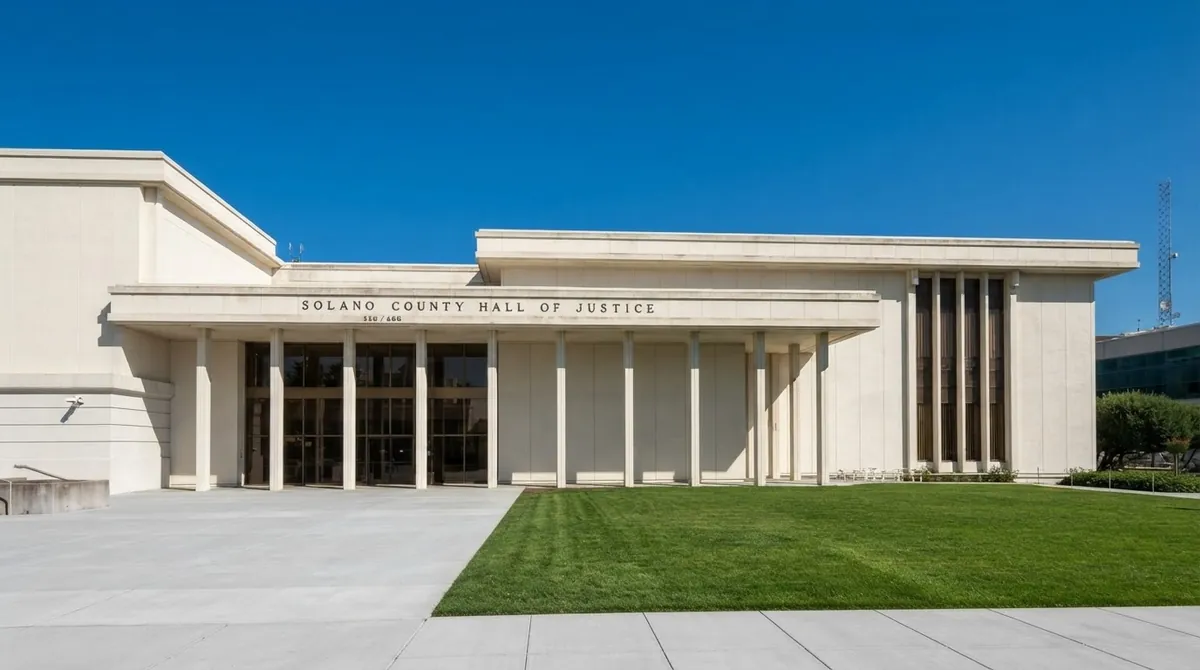
Court records in Solano County, California, are maintained by the Clerk's Office of the Superior Court of the county and are accessible through online tools, official court portals, and directly at the Clerk's Office. SolanoCourt.us will help you find public information about the county's court records. Additional sources include the Solano Superior Court online portal, the court's online services page, and the court clerk's office, where you can obtain certified copies of documents or view case materials in person.
Solano Court System Overview
Solano County is served by the Superior Court of California, County of Solano. California operates a unified trial court system: each county has one Superior Court that handles all categories of cases—criminal, civil, family, probate, and juvenile. The court operates in two main locations: in Fairfield and Vallejo.
At the federal level, the county is part of the Eastern District of California (U.S. District Court for the Eastern District of California). The California Judicial Branch coordinates the activities of all superior courts in the state.
Main Court (Hall of Justice):
Courts Serving Solano
Residents of the county are served by several judicial institutions—both at the state and federal levels.
Superior Court of California, County of Solano
Handles all state-level cases: criminal, civil, family, probate, juvenile, traffic violations, and small claims.
Federal District Court for the Eastern District of California
Cases involving federal law, constitutional issues, or parties from different states with a claim amount over $75,000.
Federal Bankruptcy Court (Eastern District of California)
What Types of Cases Solano Courts Hear
The Superior Court of Solano County has jurisdiction over all types of state-level cases. Here are the main categories:
- Criminal cases—felonies, misdemeanors, infractions
- Civil cases—claims of any amount, including small claims
- Family law—divorce, custody, support, paternity, protective orders
- Probate cases—estate administration, guardianship, conservatorship, trusts
- Juvenile cases—minor offenses, child protection, adoption
- Traffic violations—fines, DUI
District Court Cases in Solano
California does not have a separate division into "district court" and "magistrate court" at the state level—the Superior Court is the only trial court. The Criminal Division of the court processes and maintains records of felonies, misdemeanors, and infractions.
Felonies are the most serious category. After charges are filed, the case goes through preliminary hearings, and if the judge finds sufficient evidence, the case is set for trial. A judge is assigned according to the court's internal rules. Civil claims with large demands are also heard in the general civil division of the Superior Court.
Appeals from the Superior Court's decisions are filed with the California Court of Appeal for the First Appellate District.
Magistrate Court Cases in Solano
California does not have separate magistrate courts. Instead, the Superior Court hears all cases, including those that in other states fall under the jurisdiction of magistrate judges:
- Misdemeanors and infractions
- Preliminary hearings in felony cases
- Traffic violations and DUI
- Small claims—up to $10,000 for individuals
For limited civil cases, the maximum claim amount is $25,000 according to the California Code of Civil Procedure. Cases above this amount are classified as unlimited civil cases. Fines for violations can be paid through the court's online services page.
Family Law, Probate, and Juvenile Matters in Solano
Family Law
The Family Law Division of the Superior Court handles cases of divorce, legal separation, annulment, paternity, child custody, support, domestic violence, and protective orders. Filings are submitted to the court clerk's office in Fairfield or Vallejo.
Probate Cases
The probate division handles the administration of deceased estates, appointment of guardians for minors, conservatorship for adults who cannot make decisions independently, and trust matters. These cases are usually heard in Fairfield.
Juvenile Cases
Juvenile cases—from offenses to child protection and adoption—are heard in a separate juvenile division. Juvenile records are confidential under California law, and access to them is strictly limited.
How Cases Move Through the Solano Court System
The progression of a case depends on its type, but the general sequence is as follows:
- Case initiation. A criminal case starts with a complaint or indictment. A civil case begins with the filing of a complaint. Family or probate cases start with a petition.
- Judge assignment. The court clerk assigns a case number and appoints a judge according to internal distribution.
- Initial hearings. In criminal cases, this is an arraignment where charges are read to the defendant. In civil cases, it's a planning conference.
- Pretrial phase. Filing motions, exchanging evidence (discovery), plea negotiations, or settlement discussions.
- Trial. Court proceedings before a judge or jury, settlement, plea, or default judgment.
- Post-judgment. Sentencing, filing appeals, enforcement of the court's decision.
Information about the status of a specific case can be checked through the Solano Superior Court public portal. Note: according to California Rule of Court 2.504(b), an electronic record is not an official court document unless the court has certified it electronically.
Court Administration, Local Rules, and Public Access in Solano
The administration of the Superior Court of the county is carried out by the Presiding Judge along with the Court Executive Officer. Local court rules and administrative orders are published on the official court website.
Public access to court records is governed by the California Rules of Court and the California Public Records Act. Most court documents are publicly accessible, but there are exceptions:
- Juvenile cases—confidential
- Certain family cases—restricted access
- Sealed or expunged records
- Documents containing personal identifiers
Requests for public records from the California Department of Justice can be submitted through the DOJ online form. Hearings can be attended in person, and for some types of cases, the court offers remote participation—details are available on the online services page.
To view case materials in person, records are stored in the division where the hearings took place. Details regarding records, fees, and forms are published on the court's website.
Court Records and Related Court Resources in Solano
- Online case search. The Solano Superior Court portal allows you to search case data, view hearing schedules, and track updates. Parties to a case receive enhanced access after authorization.
- Court calendar and e-filing. Hearing schedules, e-filing, fine payments, and appointments with the clerk's office are all available through the court's online services.
- County recorder's records. The Solano County Recorder-Assessor's Office provides public access to land records, real estate documents, and other registered documents.
- State criminal records. You can request your own criminal history through the DOJ fingerprint review process—you need to undergo Live Scan at a local police department or sheriff's office.
- Inmate search. The CIRIS system of the California Department of Corrections provides information about individuals in state prisons, including parole hearing dates.
- Crime statistics. The OpenJustice platform of the California Department of Justice publishes data on arrests, crime, and other law enforcement metrics statewide.
- Divorce certificates. Certified copies of divorce records can be obtained through the California Department of Public Health (CDPH) or directly from the Superior Court clerk's office.
- Forms and self-help resources. The Solano Superior Court website features court forms, instructions for self-represented individuals, and information about the financial hardship program for reducing court fees.